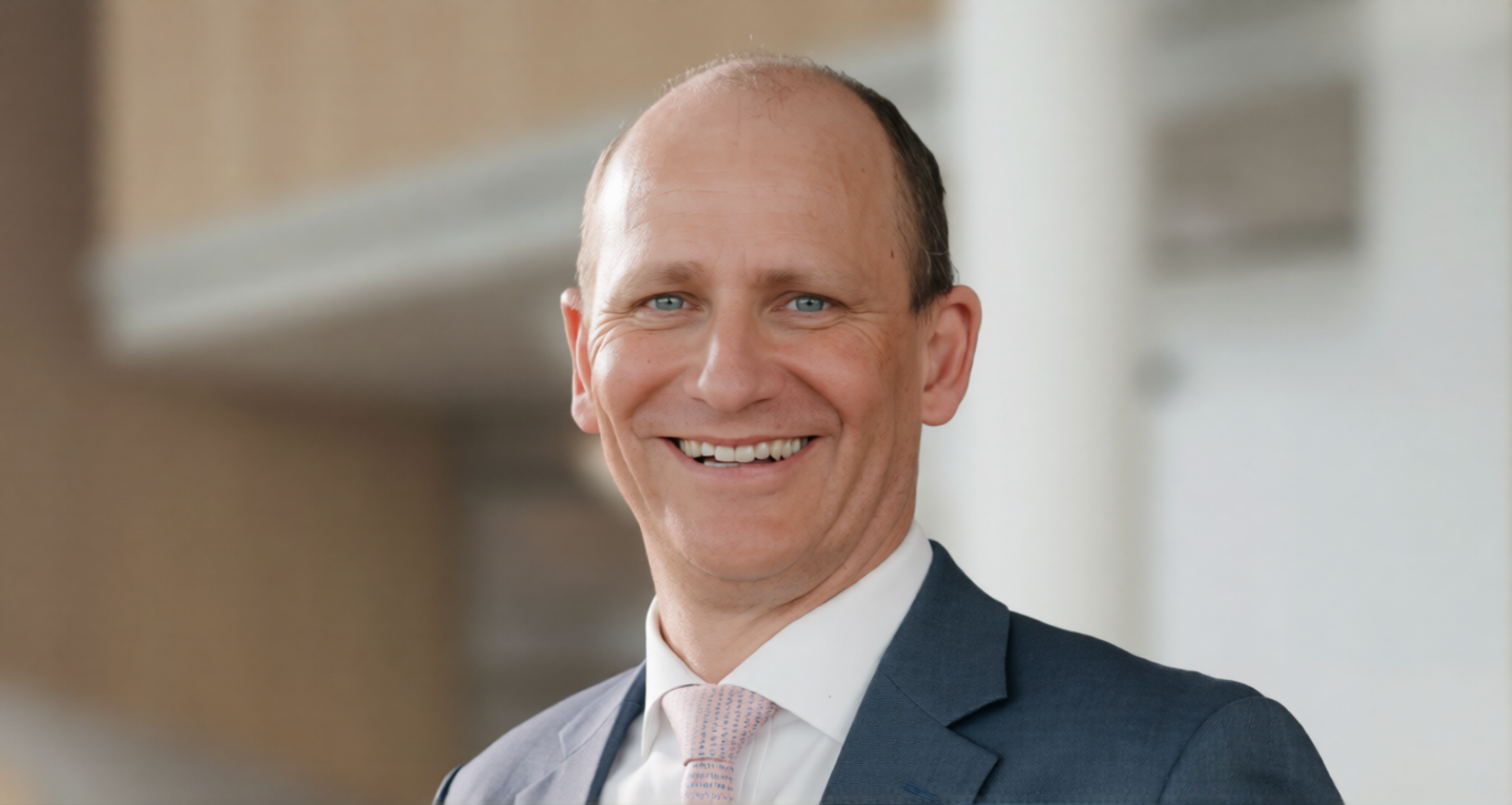
The integration of ESG-related factors in investing is increasingly becoming mainstream not only due to top-down drivers like regulations but also bottom-up considerations from geopolitics and energy dependence, said Markus Müller, Deutsche Bank Private Bank’s chief investment officer for sustainability, in our new series, [Inside the Chief Investment Office].
In 2025, global sustainable funds registered a USD 84 billion in net outflows, according to a Morningstar report, marking the first year of annual redemptions since the research firm began tracking the segment in 2018. A notable reason cited by the report was the political backlash against ESG (environmental, social, and governance) in the US under the Donald Trump administration alongside spillover effects in Europe.
Despite the headwinds, Markus Müller, Deutsche Bank Private Bank’s chief investment officer for sustainability, believes the outlook for sustainable investing remains positive due to themes that are driven by secular forces, particularly regarding energy.
Structural drivers
According to Müller, the incorporation of ESG factors is increasingly becoming a norm in investing with sustainability-related regulatory requirements like reporting or disclosure, and the increasingly institutionalized approach in the decision-making processes of ultra-high net worth individuals, family offices, churches and foundations. But beyond the behaviour of any individual regulator or investor, he believes there are structural drivers that are reshaping markets.
“Perhaps most importantly, there are sustainability themes that countries, markets and individual investors simply can no longer ignore – for example, the risks around geopolitics and energy dependence, further amplified by energy demand from AI and data centers,” said Müller in an interview with Global Private Banker. “We expect sustainability-related considerations to become increasingly integrated into mainstream investment processes.”
In a report released by Deutsche Bank in June, the bank highlighted the investment opportunity in electrification. It cited not only decarbonisation ambitions as a reason, but also security considerations by policymakers from experiences in supply chain disruptions and heightened geopolitical tensions exposing vulnerabilities from dependence on concentrated sources fossil fuels.
The report highlighted five key themes representing the building blocks of the electrified energy system: clean energy and renewable power producers; nuclear energy; batteries; critical minerals and rare earth elements; and electric vehicles.
Emerging market opportunity
By geography, Müller noted that the ESG investment opportunity in emerging markets, like Asia, is “potentially even more exciting than in developed markets”.
“Many Asian economies are technologically very advanced and they have both the capability and the will to implement infrastructure and technologies at a scale and depth that more mature economies, like Europe, cannot easily do,” said Müller, who is also the global head of the German bank’s chief investment office.
“In China, for example, it is clear they want to embrace renewable energy technologies to underpin their multiple ambitions in AI, electric vehicles and other sectors.”
In 2026, global sustainable funds are seeing a rebound with inflows of USD 3.5 billion in the first quarter of 2026 and USD 3.7 billion in the second quarter, according to Morningstar data.
Group-wide commitment
Deutsche Bank’s convictions to sustainability is more than just about it being an investment theme and extends to commitments across the group.
The bank has a dedicated function through its chief sustainability office to develop strategy and drive initiatives. Within individual divisions, including investment banking and private banking, it has sustainability experts sitting in the business to provide support in identifying risks and opportunities.
In November 2025, the German lenders also announced its new goal of achieving EUR 900 billion (USD 1 trillion) in sustainable and transition finance from 2020 to the end of 2030 and a nature ambition of facilitating 300 transactions by the end of 2027 to support biodiversity as well as ecosystem conservation and restoration in alignment with the UN Sustainable Development Goals.
“We believe sustainability-related considerations can provide an additional perspective on long-term risks and opportunities and are becoming increasingly relevant for investors, economies and markets,” Müller added.
Global Private Banker’s [Inside the Chief Investment Office] is new editorial series focused on spotlighting the latest CIO developments from industry leaders, including market insights, house views, asset allocation, innovations, and more.